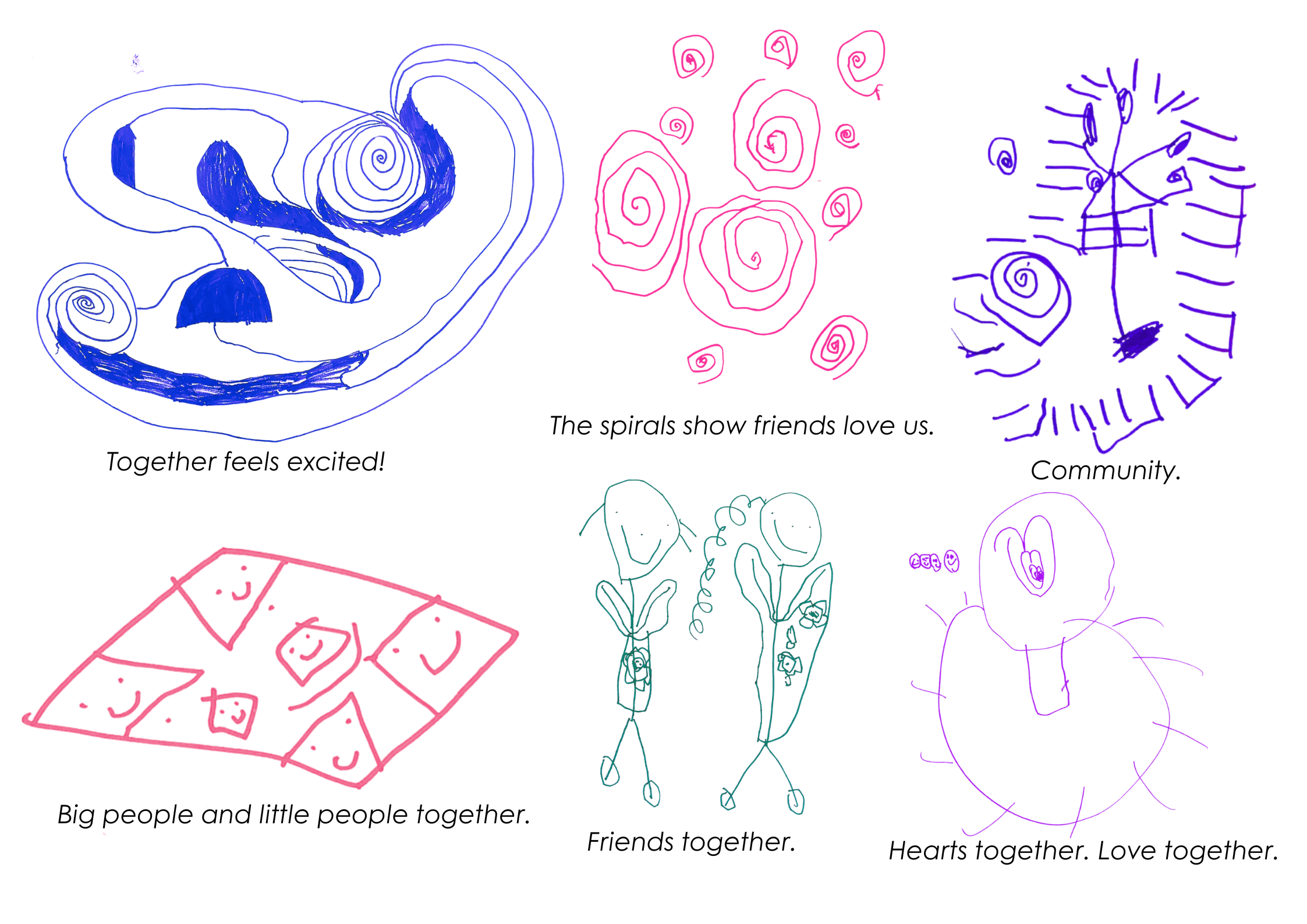
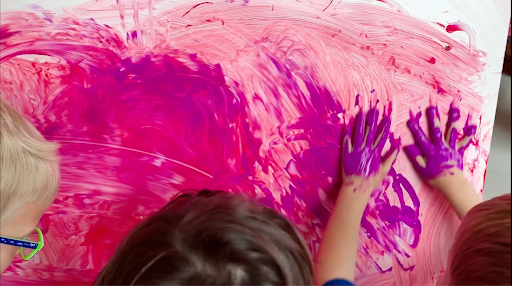
If you wander through our Early Childhood corridors this week, your eyes will undoubtedly be drawn to a vibrant masterpiece hanging on the wall: a beautifully stitched community quilt created entirely by our youngest Early Childhood (EC) and Kindergarten (KG) learners.
At first glance, it is a stunning piece of collaborative art. But beneath the colorful fabrics and varied textures lies something much deeper. This quilt is a tangible, living representation of how young children learn. At AISB, our early childhood experiences are deliberately designed around a deep understanding of developmental science, matching the natural, brilliant way a child’s brain processes the world at this age.
A Multitude of Skills in Every Stitch
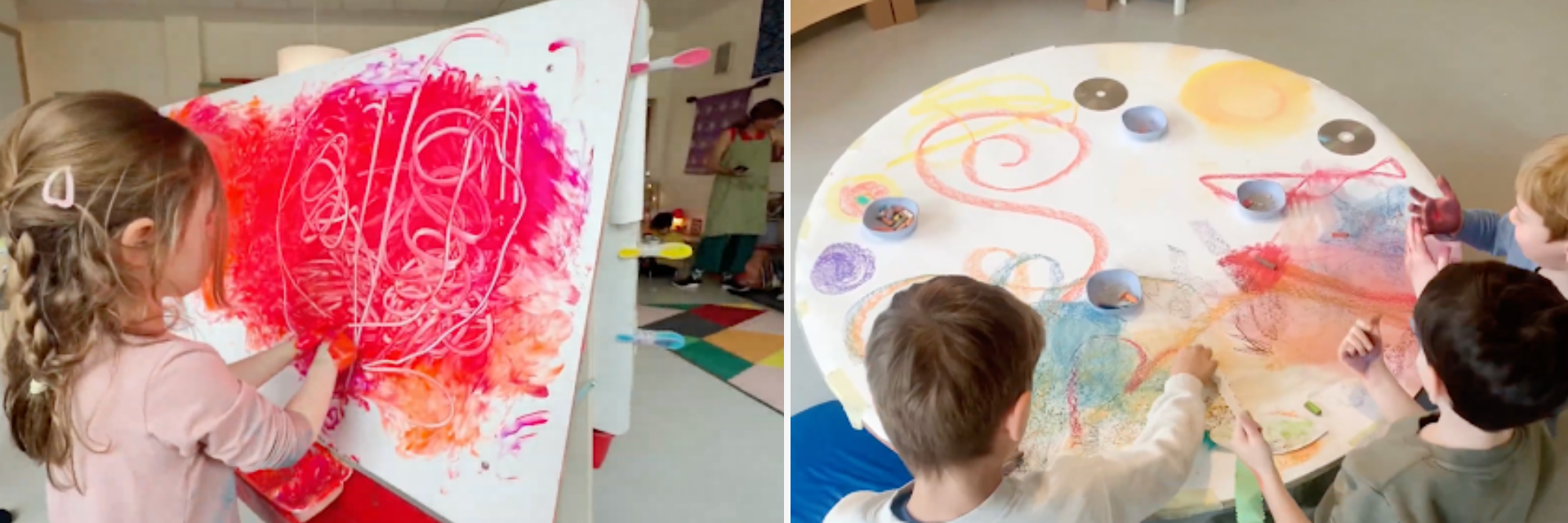
For a four- or five-year-old, learning is completely holistic. They do not compartmentalize math, art, language, or science; their brains integrate these domains simultaneously through sensory, hands-on exploration.
The creation of this quilt required a rich multitude of developmental skills:
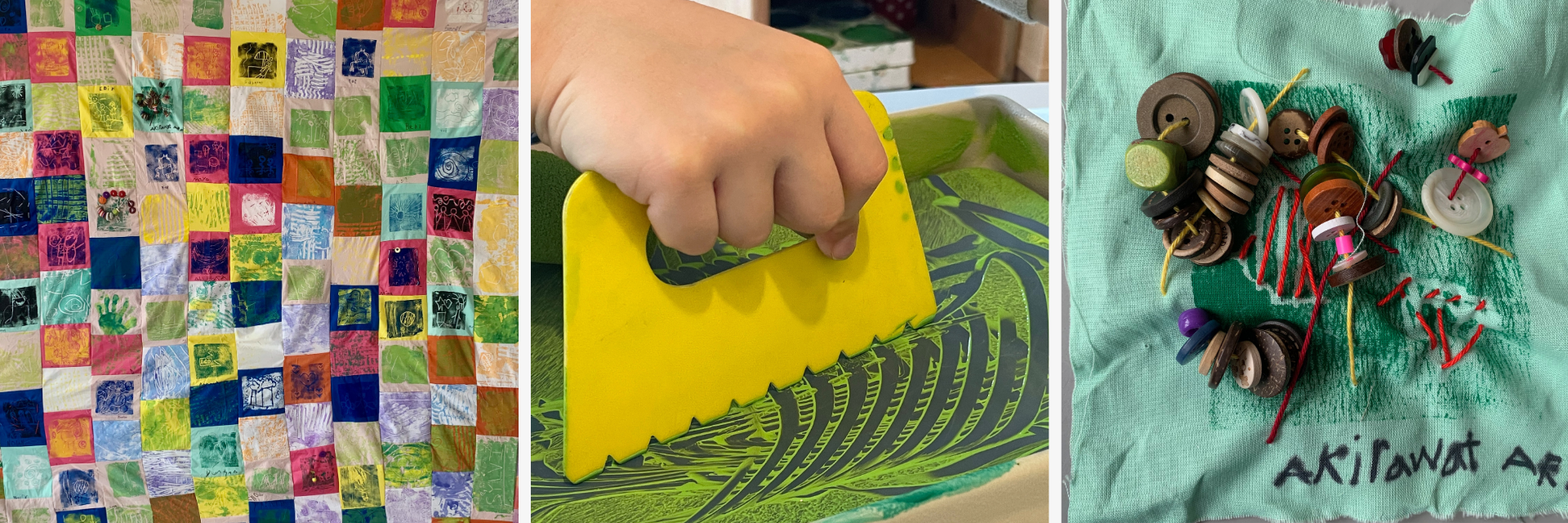
- Fine Motor Engineering: Selecting fabrics, cutting shapes, and sewing materials requires precision. These actions strengthen the small hand muscles and bilateral coordination needed for future writing and intricate tasks.
- Expressing Identity Through Design: The children experimented with line and shape to create their own unique prints. Every block became a personal canvas, allowing our youngest students to explore visual language and express their own budding identities.
- Spatial and Mathematical Reasoning: Planning the layout of the quilt patches naturally introduces foundational mathematical concepts. Children explore symmetry, geometric shapes, patterns, and spatial awareness as they decide how individual squares fit into a collective whole.
- Cognitive Sequencing: Following a multi-step project from a blank piece of cloth to a final sewn product exercises the brain's executive functioning skills: teaching planning, working memory, and cognitive flexibility.
The Science of Belonging
Beyond the tangible cognitive and physical skills, the quilt speaks directly to emotional and social brain development. Research shows that a child's brain is optimally primed for learning when they feel safe, seen, and deeply connected to a community.
Each patch on this quilt represents an individual child’s voice, personality, and creative expression. Yet, when woven together, those individual expressions form a unified, resilient whole. By participating in this collaborative project, our EC and KG students experienced a profound lesson in citizenship and belonging. They learned that their unique contribution matters, and that we are all interconnected.
We are incredibly proud of our youngest artists and engineers, and deeply grateful to our early childhood educators who masterfully translate developmental science into magical, memory-making classroom experiences.