
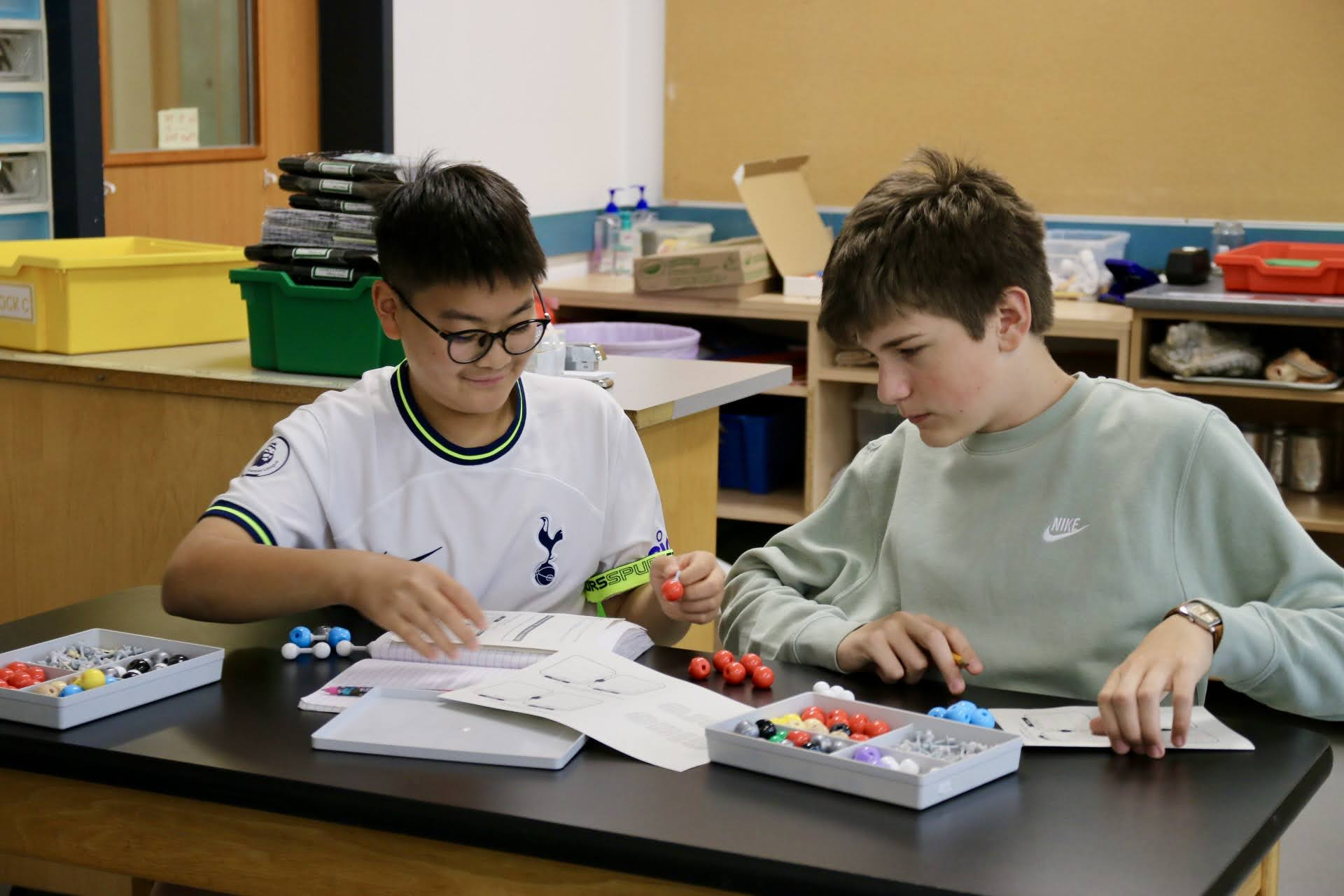
Every day, the universe performs a brilliant, hidden magic trick: it breaks apart familiar things to construct something completely new. This month, our Middle School scientists stepped directly into this subatomic world to answer a fundamental mystery of physical science: How do atoms rearrange to make new substances?
As we approach the conclusion of our Chemical Reactions unit, our students are discovering that "new" materials do not simply appear out of nothing. Instead, they are the result of a hidden dance of matter—where atoms break their original bonds and form entirely new partnerships.
Bridging the Abstract and the Physical
True scientific understanding requires moving past memorization and stepping into the role of an active designer. To explore how matter transforms, our students have been bridging the gap between abstract chemical formulas and tangible structures.
The learning journey unfolded through a deliberate, multi-step process:
- Visualizing in 2D: Students began by mapping out the molecular world in their science notebooks. By drawing detailed 2D models, they carefully tracked individual atoms before and after a reaction, establishing a foundational understanding of the Law of Conservation of Mass.
- Stepping into 3D: To deepen their structural understanding, students transitioned from their notebooks to physical molecular modeling kits. Building three-dimensional representations allowed them to visualize the actual geometry, scale, and spatial orientation of the molecules they were studying.
- The Physics of Transformation: This hands-on transition offered a powerful "aha" moment. Students physically "broken" chemical bonds and moved individual atom spheres to construct entirely different product molecules.
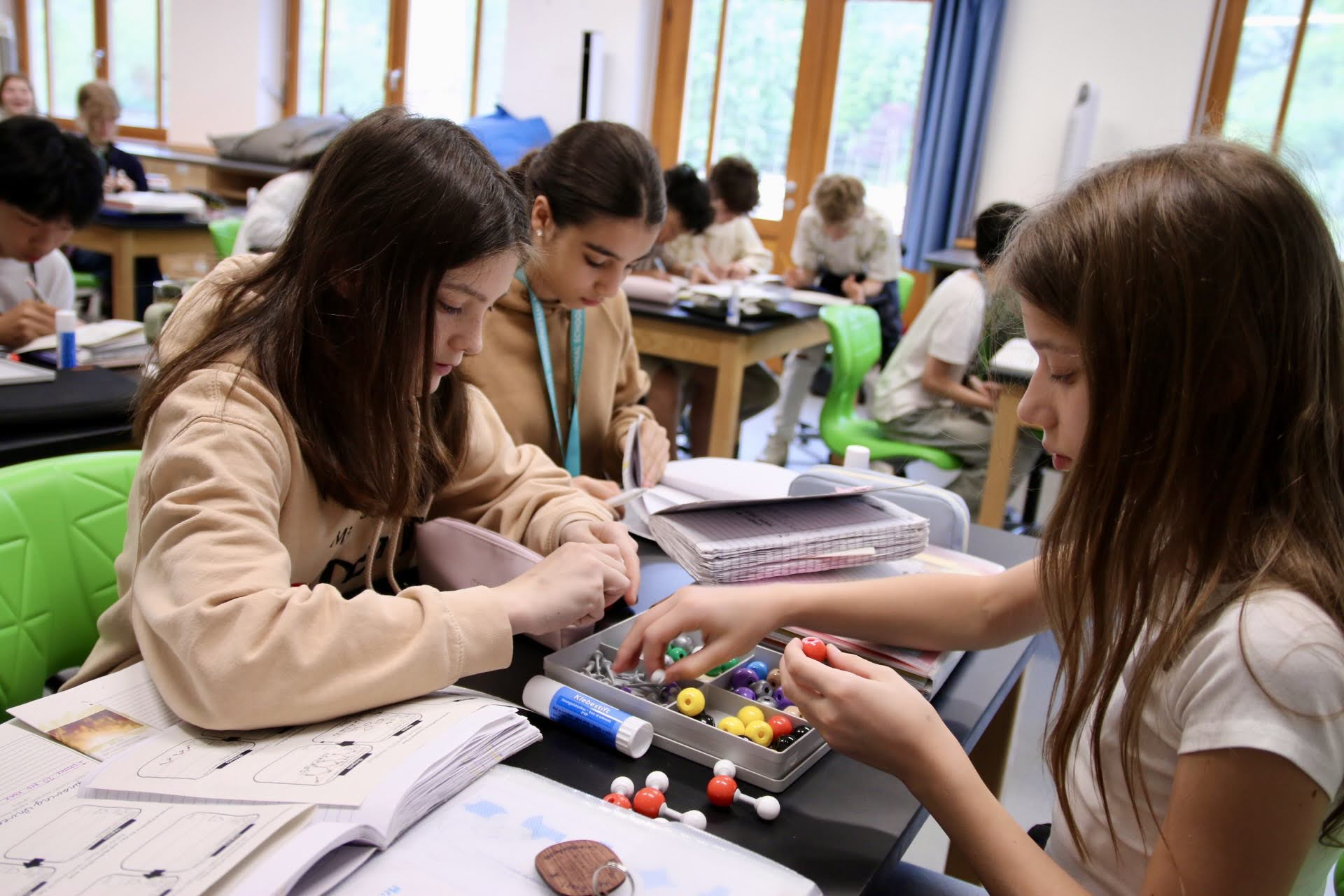
By manipulating these physical pieces, our scientists provided tangible, self-directed evidence to answer our unit’s driving question: How do we make something new that was not there before?
Through this interactive process of modeling, trial, and observation, our students have built far more than just a temporary piece of teamwork. They have developed a clear, lifelong framework for understanding how the building blocks of matter are constantly recycled to create the universe around us.
This conceptual milestone teaches a vital scientific mindset: that the world is not fixed, but rather an ongoing story of reorganization, transformation, and potential. We are incredibly inspired by the curiosity and precision our students brought to the lab, and we look forward to watching them apply this systemic thinking to even greater scientific challenges ahead!