
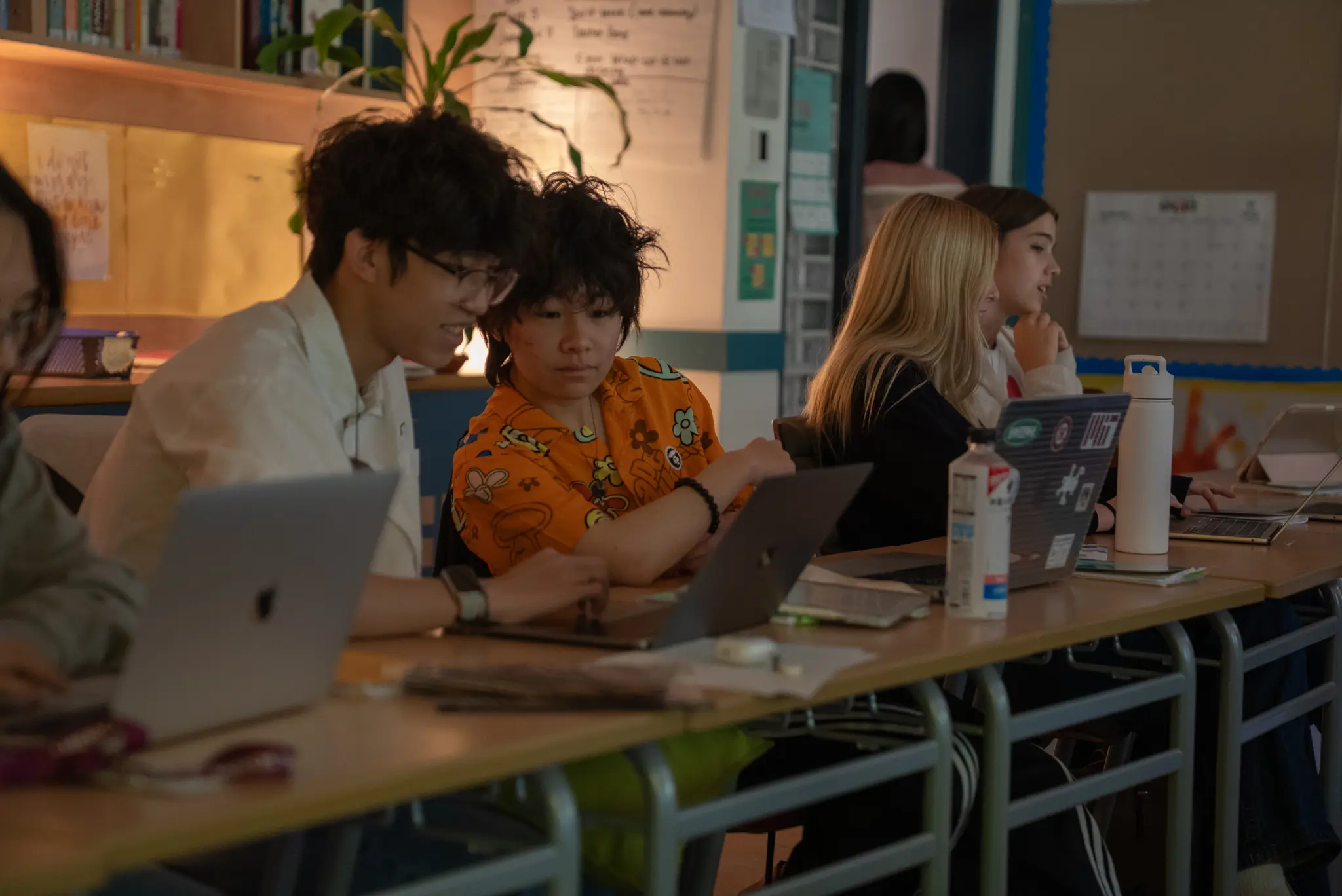
In March 2025, AISB introduced a new program called the “Dual Diploma”, which combines the rigor of the established IB program with the project-based learning of the Global Impact Diploma. AISB was the first and only school worldwide to offer this combination, and I was one of only 6 students to take on the pilot program. Mr. Corey Topf, who was one of the steering members of the GID, was a supportive mentor for us throughout the first year.
Come August, and I began 10th grade, taking two IB courses alongside two GID courses, stepping into an experience that none of us could fully predict.
One IB course I chose was IB Business Management. Taking an IB course earlier than most students was academically demanding, but there was another challenge I had not anticipated: the social aspect. I was suddenly sitting in a classroom with Grade 11 students who had already spent more time in the IB program than I had. At first, it was strange being one of the younger students in the room. I had to become comfortable asking questions, contributing to discussions, and learning alongside people further ahead in their high school journey.
The workload was certainly one of the biggest challenges. I am not going to sugarcoat it: pursuing the dual diploma is a lot of work. Balancing IB assignments, GID projects, extracurricular activities, and life outside school requires organization, discipline, and the ability to keep going when several deadlines arrive at once.
What made the experience different, however, was that the two programs challenged me in different ways. IB pushed me to build knowledge and develop academic discipline, while GID challenged me to apply that knowledge. Instead of always having a clear question with a correct answer, GID projects often required us to define problems ourselves, decide how to approach them, and revise our work along the way. This helped me develop skills that are difficult to learn from a textbook alone: taking initiative, working through uncertainty, collaborating, and turning ideas into something tangible.
One of the most interesting additions was the new internship course. Rather than treating an internship as simply something to add to a résumé, the course gave us the opportunity to experience the process of finding and completing one in a way that resembled the real world. From reaching out to potential mentors to learning how to communicate professionally, the experience pushed us beyond the usual boundaries of a classroom.
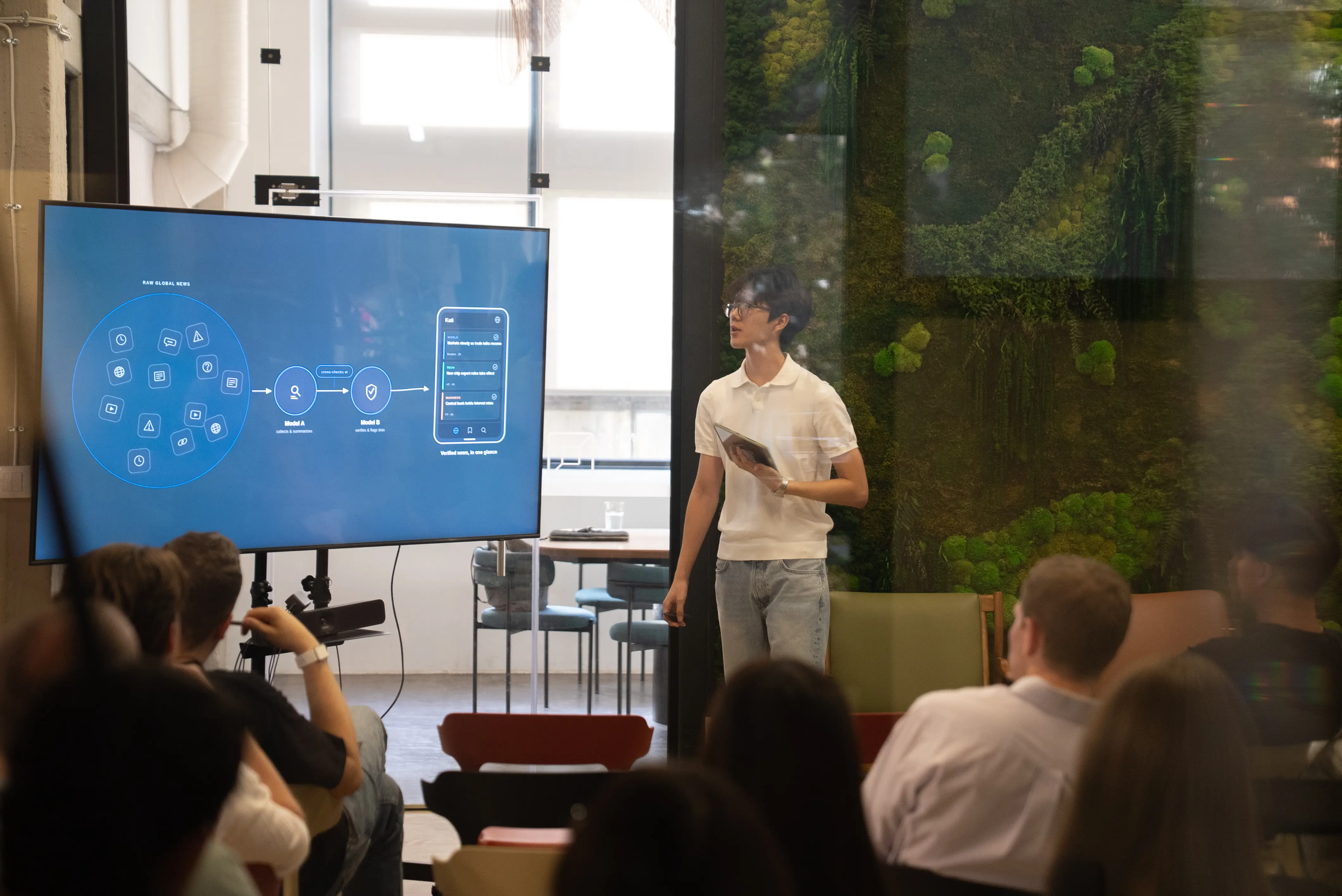
My biggest piece of advice for future students is to start looking for your internship early. It can be tempting to put it off when you have so many other assignments and projects, but the work can quickly pile up toward the end of 10th grade. Starting early gives you more time to find an opportunity that genuinely interests you, build a meaningful relationship with your mentor, and get the most out of the experience rather than treating it as another deadline to complete.
The internship also showed me something that is easy to overlook in school: learning from other people can be just as valuable as learning from a textbook. Seniors, professionals, and mentors can offer perspectives that you simply cannot get from a traditional lesson. Learning from people willing to share their experiences made the process much more meaningful.
Looking back, my 10th-grade year was definitely challenging, but that challenge is also what made the experience worthwhile. The dual diploma pushed me not only to become more knowledgeable and academically disciplined, but also to figure out how to use what I learned in real situations.
There is also an obvious benefit when thinking about university applications. The IB is internationally recognized for its academic rigor, while the GID emphasizes leadership, character development, initiative, collaboration, and creating meaningful impact in the real world. Together, they can demonstrate that a student can not only handle demanding academics, but also apply what they know beyond the classroom.
However, I don't think the most important benefit is simply having two diplomas to put on an application. The more valuable part is what you become while earning them.
For students considering a similar pathway, my biggest piece of advice is simple: be prepared for the challenge. Don't choose it because it sounds impressive or because you think it will look good on a university application. Choose it because you genuinely want to be pushed outside your comfort zone.
You also need to be patient. Some GID projects don't immediately have a clear direction, and some of the most valuable learning happens when something doesn't work the first time. You have to be willing to collaborate, accept feedback, change your approach, and keep working.
For schools considering implementing a similar program, I would emphasize the importance of having a strong support system. Because this was the first year of the dual-diploma pathway, there was naturally a lot of experimentation and adjustment along the way. Students need teachers and mentors who understand that they are taking on something new and complex, while also taking responsibility for their own learning rather than waiting for someone to tell them exactly what to do.
Ultimately, I think that is what makes the dual diploma so valuable. It doesn't just aim to create students who know a lot. It challenges us to become people who can collaborate, communicate, solve unfamiliar problems, take initiative, and turn ideas into action.
For me, that has become one of the most meaningful parts of the experience: figuring out not just what I can learn, but what I can do with what I learn. The combination of academic study, projects, internships, and collaboration has given me opportunities to explore my interests while asking a bigger question: How can my skills and interests create something meaningful?
That, more than the two diplomas themselves, is what makes the experience worthwhile.
The goal isn't simply to graduate knowing more. It's to graduate knowing how to make an impact.